History of Firefall
How Red 5's jetpack MMO changed from its reveal at PAX in 2010 to the night the servers went dark in July 2017.
Firefall had one of the more unusual lives an online game can have. Red 5 showed it to the public in 2010, kept it in closed and open beta for almost four years, launched it in the summer of 2014 and turned off the servers three years later. In between, the game was taken apart and put back together more than once, mostly in full view of the people playing it, quite a few of whom were paying for it.
This page follows that arc from the founding of the studio to the shutdown and what came after. The game side is based on the patch notes Red 5 posted between 2012 and 2016, the business side on press coverage from the time, since the patch notes never talk about money. For the last two years, when Red 5 itself said less and less, I also lean on the Devtracker Weekly Round Up, a player-written recap of everything the developers posted, which came out every week from 2013 to 2016. Where the record has a gap, I say so.
It's easier to follow, if you keep one question in mind throughout: what was a player actually doing on a given evening in a given year? The answer changed more often than you'd expect.
A Studio Before a Game
Red 5 Studios was founded in 2005 in Irvine, California, by a group of former Blizzard developers. The best known of them was Mark Kern, who had been team lead on World of Warcraft, and that pedigree bought the studio a lot of attention long before it had anything to show. In 2007 Red 5 went recruiting in a rather memorable way: a hundred developers they wanted to hire each received a personalized package with an iPod Shuffle carrying a message addressed to them.
The following years were less glamorous. The studio closed its Shanghai office on April 23, 2009, and laid off about 30 people in January 2010. Two months later, in March 2010, the Chinese publisher The9 bought a majority stake in Red 5 and put roughly $20 million into the project. Keep that ownership structure in mind, because it decides a lot of what happens at the very end of this story.
Firefall was revealed at PAX Prime in Seattle in early September 2010. What Red 5 showed was a team shooter with jetpacks, closer to Tribes than to anything in the MMO space, set on a future Earth that had largely been swallowed by the Melding, a creeping storm of alien energy that followed the crash of the starship Arclight, and out of which came the Chosen. Humanity held on in a handful of pockets, most famously the Brazilian coast around Copacabana, and players drove Thumpers into the ground to mine crystite, the resource that powered everything.
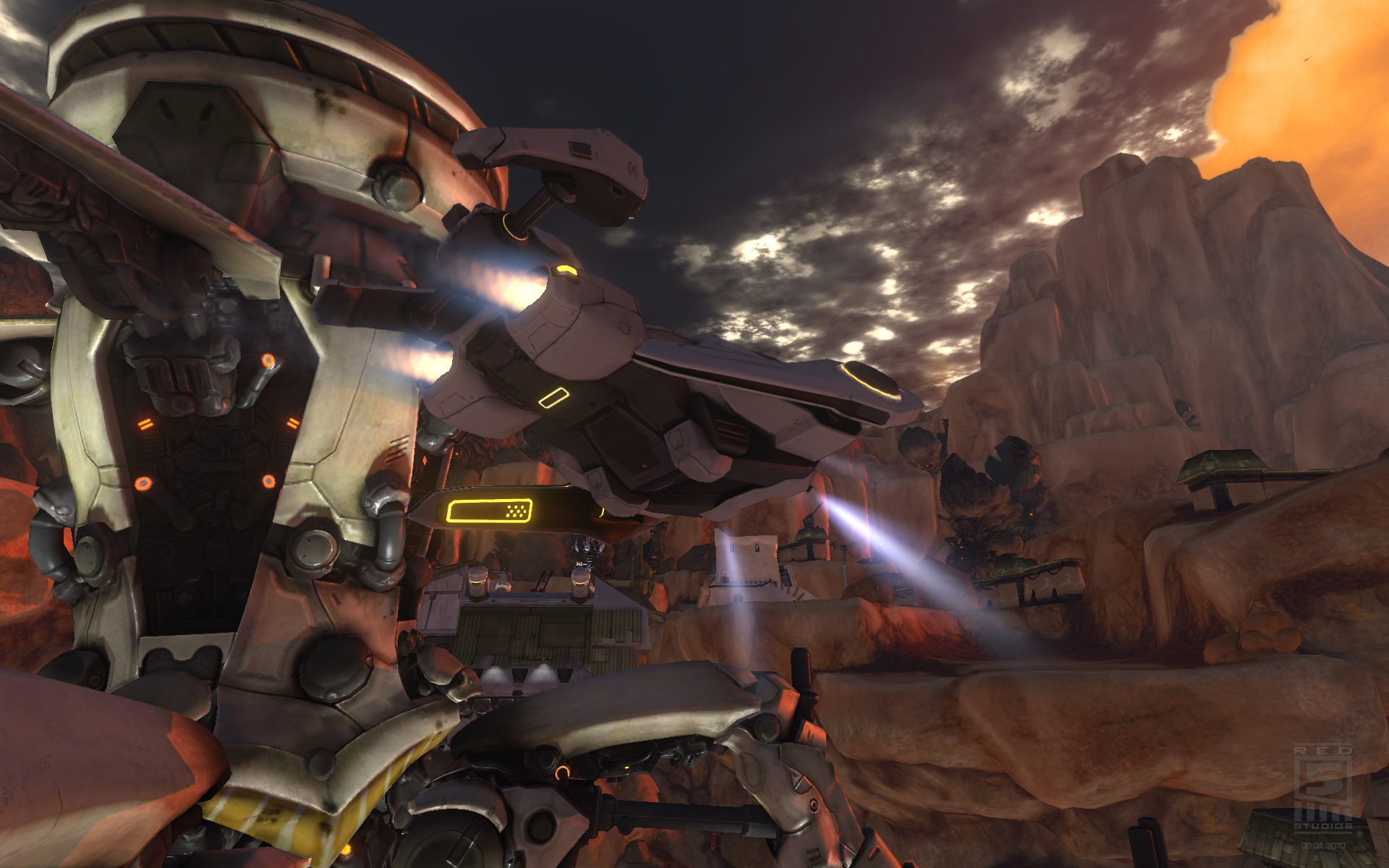
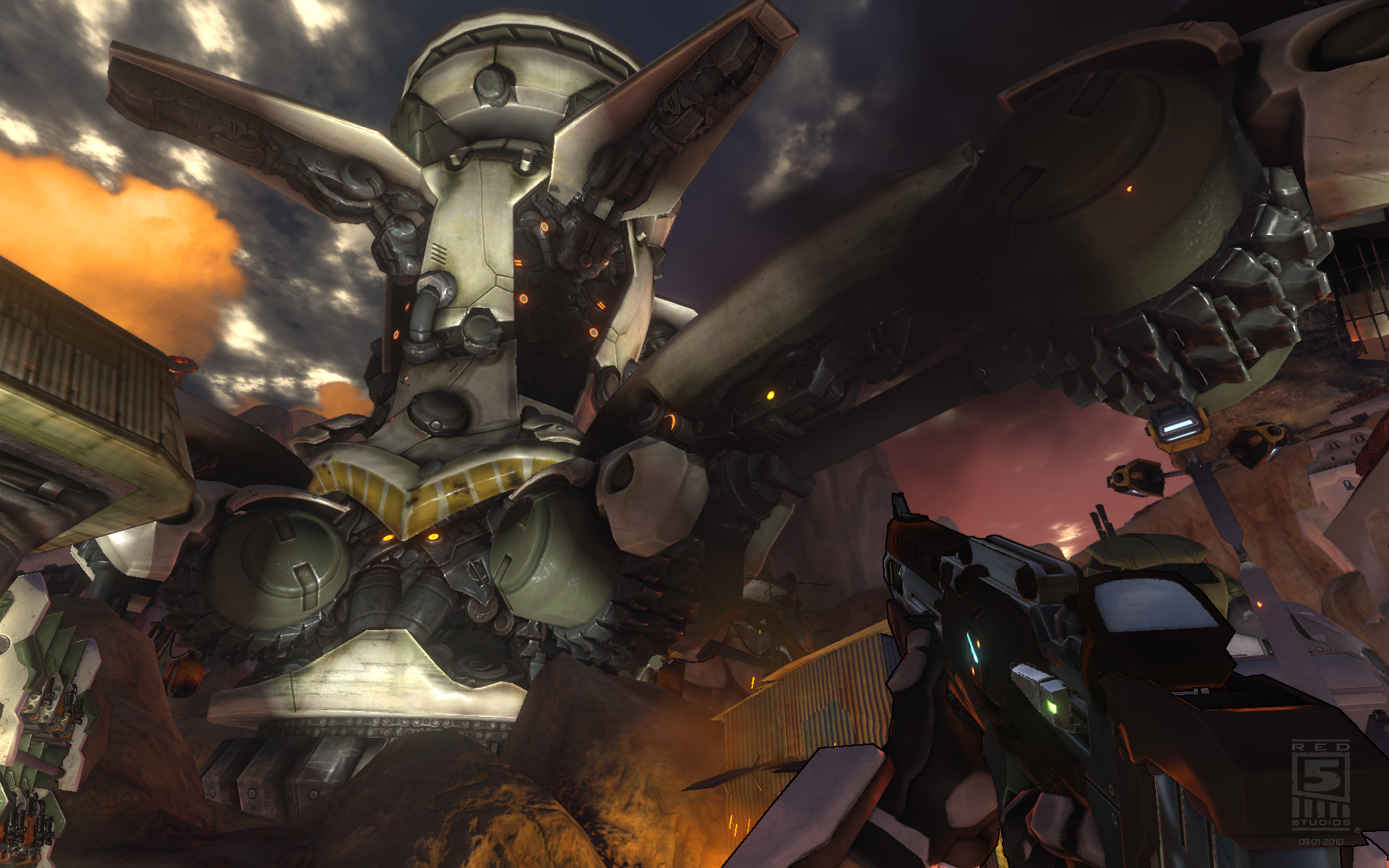
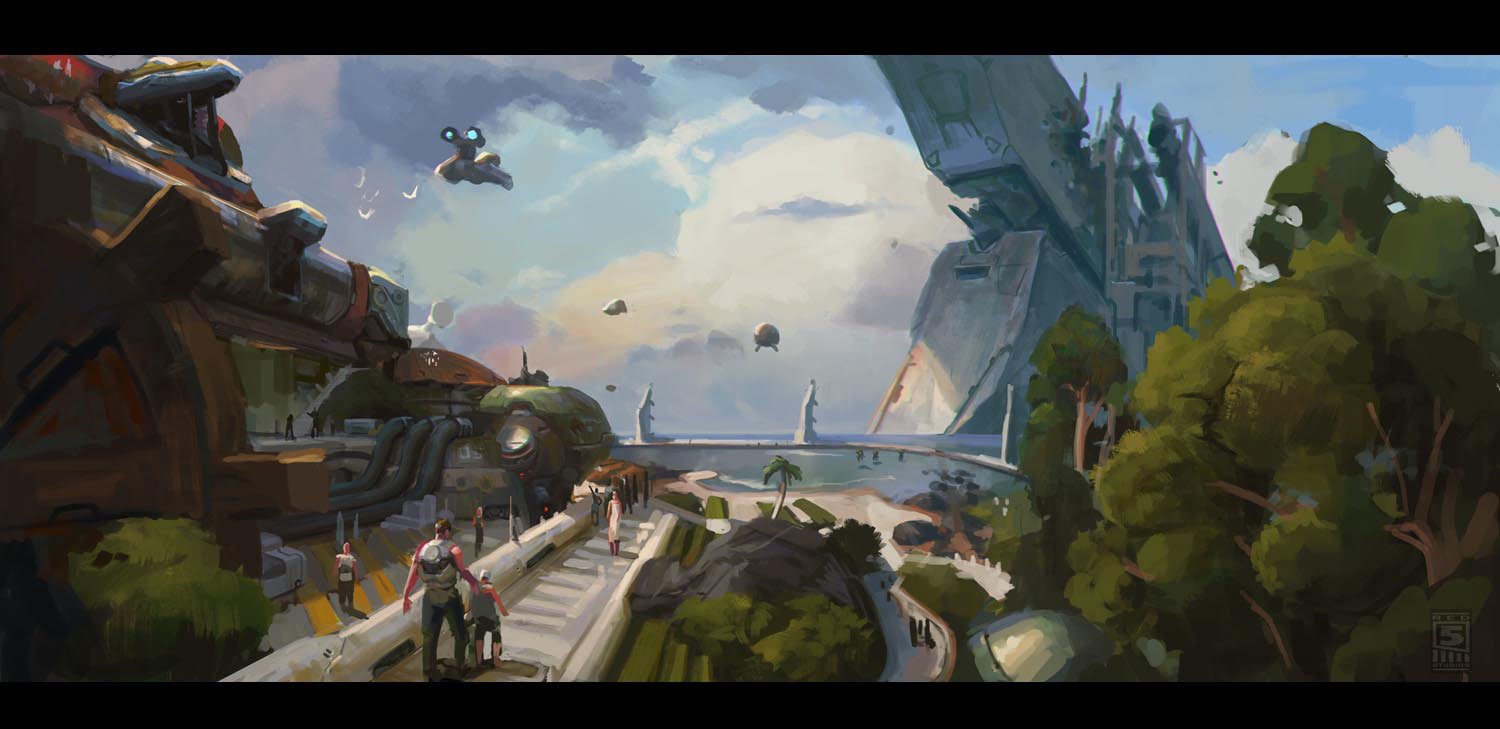
If you look at these screenshots next to anything from 2016, the art direction barely moved: sunset colors, chunky machinery, a slightly cartoonish, Borderlands-adjacent style. The game underneath it, on the other hand, would be torn up and rebuilt again and again.
Behind Closed Doors
2011 was the year Firefall became something people could actually play, if they were lucky. Red 5 brought it to PAX East 2011 with a live multiplayer tournament, and in July announced that Orson Scott Card would write the story. Less visible, but more important for the company, was a fight over who got to sell the game: on June 24, 2011, Red 5 filed for arbitration against its Asian publisher Webzen, accusing it of breaching the publishing agreement and asking for $5 million of unspent marketing money back. The two settled at the end of September, Webzen got compensated for the development fees it had paid, and Red 5, together with The9, ended up with the global publishing rights.
The closed beta started on September 2, 2011, under a non-disclosure agreement. For the first months, what testers saw stayed among testers, and the public only got the occasional trailer or convention demo.
What those early tests were like, we know from a report Red 5 sent to the testers on September 23, 2011, which only survives because someone copied it to the wiki. The test on the Tuesday before had started with an hour or so of "rough patches". The heartbeat of the servers reported no load at all, so players kept getting piled onto a single server until it fell over and took others with it. Additionally, a "nil" error locked people out at login, and the streamed textures, which were supposed to keep the download small, took up multiple gigabytes on disk. The plan was to test again the week after, with the same group of people and pretty much the same client.
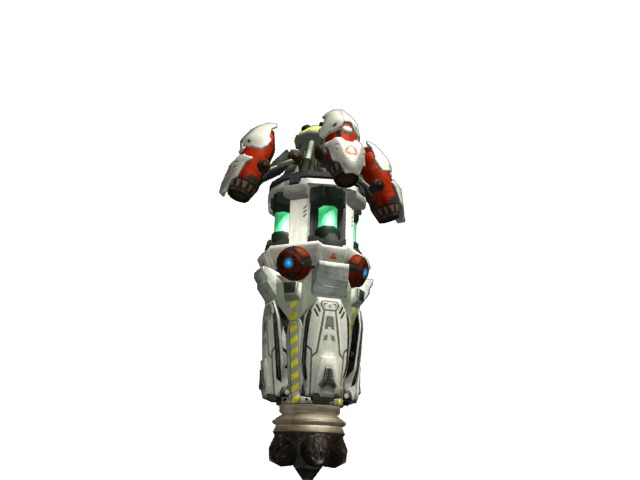
On April 2, 2012 the beta went 24/7 and four days later, during PAX East 2012, the NDA dropped. In June, Red 5 revealed the Firefall Mobile Gaming Unit, a 48-foot bus that West Coast Customs had rebuilt with 20 gaming stations, which went on to tour events. It was a lovely piece of marketing and, as it turned out later, a fairly expensive one.
The oldest patch notes that survive are from May 3, 2012, and they aren't in the official forum, but on the fan site brontodon.com, with five more weekly patches from the closed beta copied to the wiki. Red 5 patched every Thursday back then, and the notes show a game that was still being tuned week by week: the Scanhammer no longer replenished ammo, "Supercharge will no longer make super men out of players", the Thumper got 50% more health, the drop rates were doubled, and "rocks and shrubbery have had their combat abilities reduced". On May 22, Red 5 announced in a video, that the battleframe ranks would be replaced by licenses bought with XP, and the patch from June 7 increased the base run speed by a third and removed the passive abilities of all five archetypes.
That patch was the last one for two months. In mid-May the studio had split into feature teams to rework core combat, the eSports features, the dynamic content and the missions all at once, and keeping a second build alive for the testers no longer fit in. "As such, we made the difficult decision to hold off on any further beta patches until this milestone is complete", Phobos wrote on June 7, and estimated "at the very least, four weeks". It took nine, with a milestone update every week in place of a patch. On August 3 the beta servers went offline, so that the whole studio could test the new build in production over the weekend, and the old beta forums were archived, since most of what was written there wouldn't apply anymore.
The milestone went live on August 8, 2012 as v0.5.1409. Its notes are the oldest thread in the official Patch Notes forum, and they set the tone for everything after. Phobos, then producer, posted them in their entirety:
Gameplay Changes
- Changed everything.
- Created fun.
Known Issues
- Clients using Windows 32-bit may experience intermittent crashes due to out of memory errors.
- Chosen drop ship on invasion will sometimes blink in and out of visibility.
Enjoy the patch. Phobos, Patch Notes forum, August 8, 2012
It reads like a joke, and partly it was, but after two months of rebuilding it was also simply the shortest way to put it, and "changed everything" would describe more than one patch that followed. Monetization started on August 24, 2012 with cosmetics and leveling bonuses, and from August 28 Red 5 sold Founders Packs that bought access to the closed beta. The Founders patch on September 24 handed out what those packs had promised: Commander LGVs, Tiki masks, Merch pets and army name reservations.
Rebuilding in Public
If you played Firefall in 2013, you played three different games. Patch 0.6 on March 22 introduced a new progression system and, to make room for it, removed every item in the game and replaced it with starter gear. Weight became "Mass", CPU became "Cores", tiers were removed, and battleframes now advanced along three constraint trees. New players went through the Accord Battle Lab, a tutorial that walked them through all five Accord battleframes.
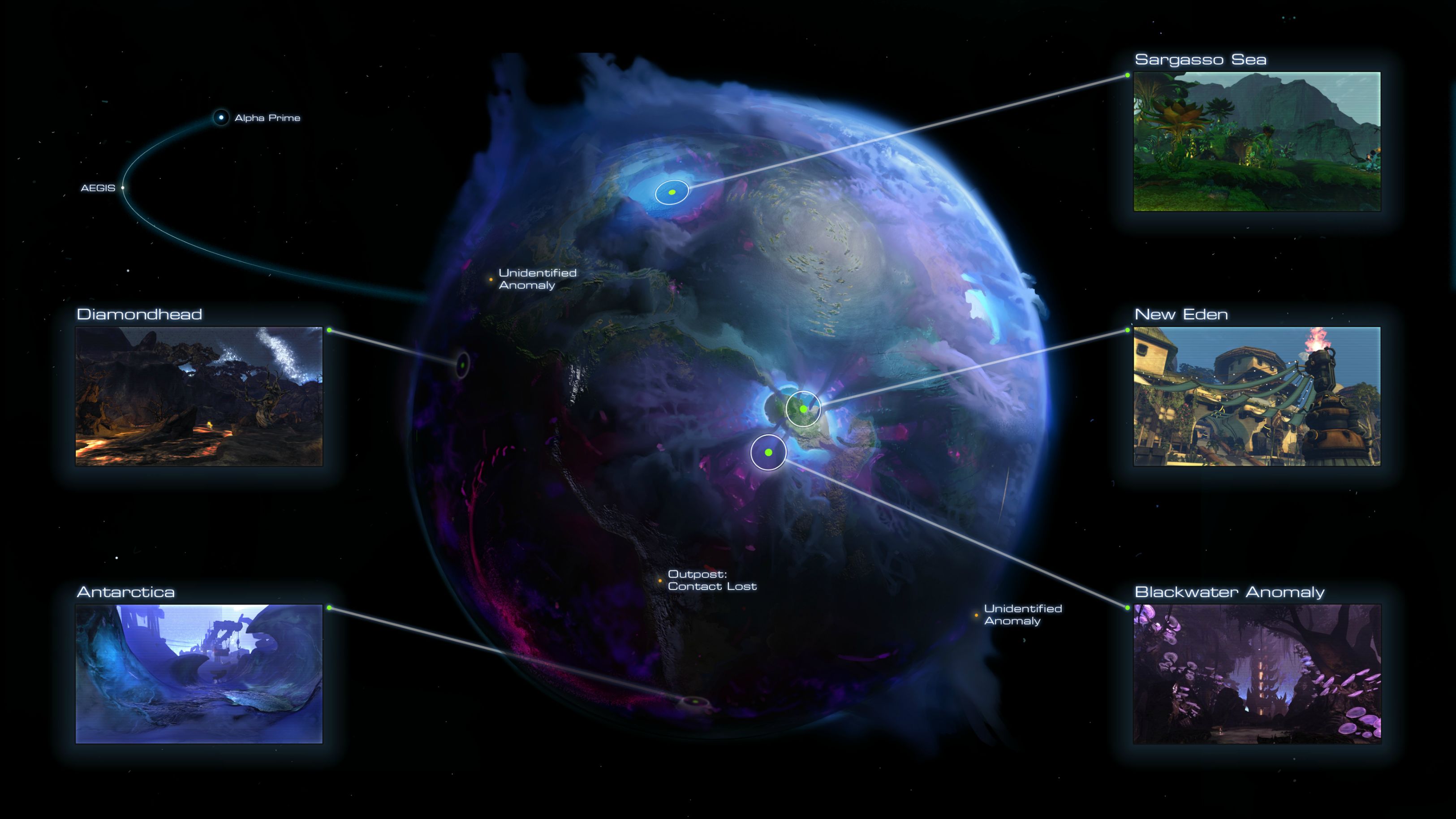
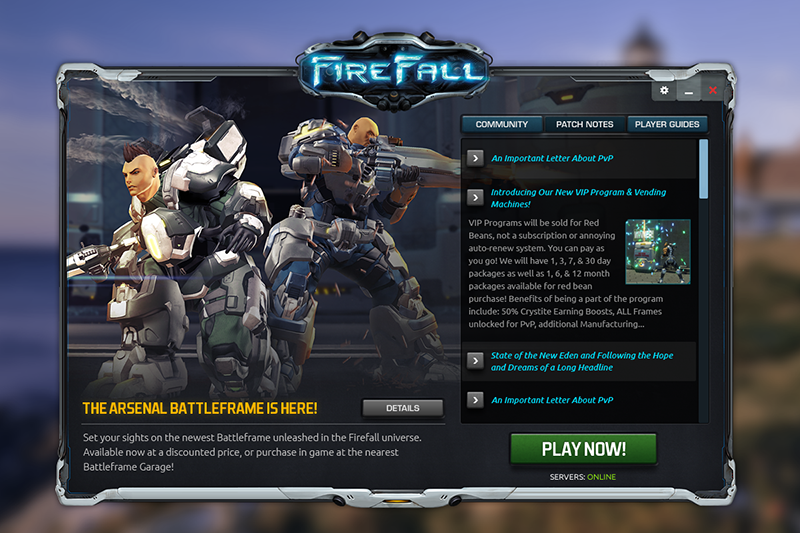
Barely three months later, patch 0.7 on June 28 changed the loop again. Enemies now dropped full items, a player marketplace opened, crafting got research and higher stages, and three small Melding Pockets became playable: Antarctica, Diamond Head and the Sargasso Sea. The same patch added Blackwater Anomaly, the first five-player instance, and Jetball, a PvP mode that would come back in 2016. Firefall also became available in French.
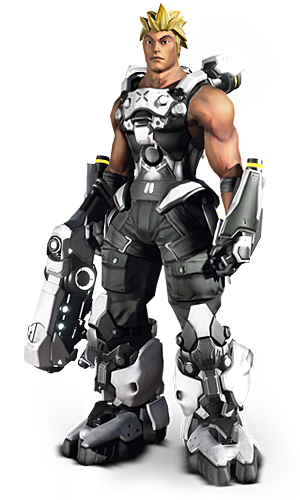
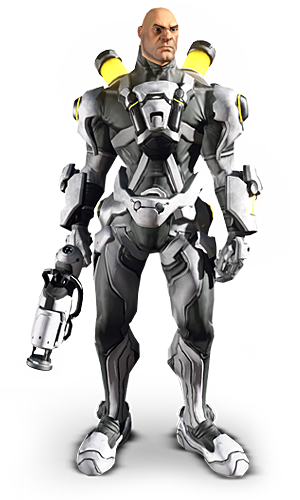
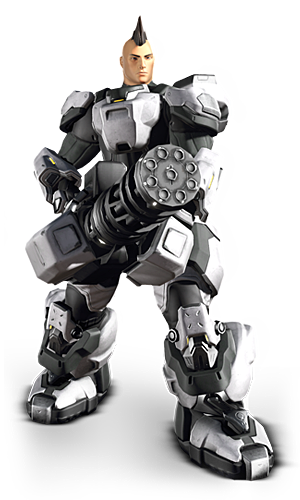
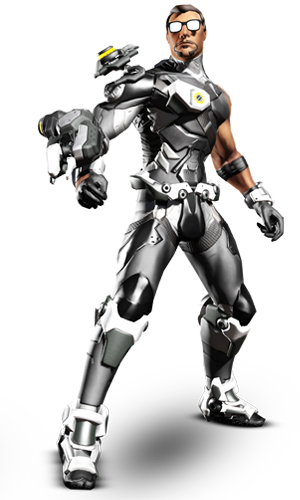
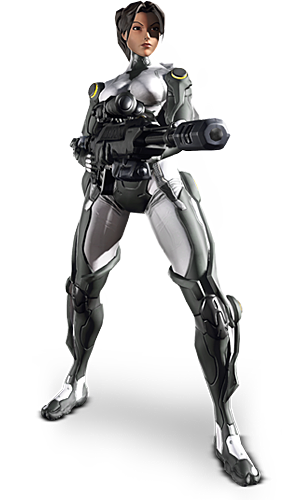
The five Accord battleframes, as the official website presented them. Each one had specialized variants on top, such as the Firecat and Tigerclaw for the Assault, or the Arsenal Dreadnaught of July 2013.
Officially, the open beta started on July 9, 2013, and from then on anyone could download the game for free. The pace of the patch notes picked up with it: July and August 2013 saw nine threads between them, more than any two months before.
The autumn brought the second annual Night of the Melding, Firefall's Halloween event, and with it two short instances outside New Eden, Cliff's Edge and Tanken Cave. From November on, bigger changes increasingly went through the public test server first, with their own draft patch notes posted to the PTS forums.
Then, on December 19, 2013, the board voted Mark Kern out as CEO. He was the last of Red 5's founders still at the studio, and James Macauley, until then VP of development, took over as acting CEO. For players, nothing visibly changed that week. In hindsight, it's the point where Firefall stopped being one person's vision and became a product that had to ship.
The Road to 1.0
The first half of 2014 was spent getting the game into a shape that could be called finished. Patch 0.8 on January 30 added campaign missions and over 70 perks, which could be mixed freely across battleframes within a budget of 105 perk points, and it cut every frame's base speed by 2 meters per second, so that crafted servos would actually matter. Patch 0.9 followed on April 22 and was mostly about the "path to launch": ahead of the new resource system, the beta resources were migrated through events like Dawn of the Invasion and the Doomsday event.
Firefall 1.0 went live for early access on July 15, 2014 and officially launched on July 29, including a release on Steam. The patch notes open with a rather candid admission:
Firefall has gone through many changes over the last six months. Due to the nature of those changes and the inter-connected nature of the systems involved, it is not possible to provide a comprehensive changelist for every weapon, ability, item, or system. "Patch Notes for Update 1.0", firefallthegame.com, July 2014
What 1.0 did was trade depth for approachability. Sertao opened for levels 25 to 37, Diamondhead became Devil's Tusk, the first raid boss Kanaloa surfaced, and ARES Jobs gave players something to do at every point of interest. Battleframes now simply leveled up to 40 instead of filling constraint trees, permanent item loss was removed, and players could form 20-player platoons. The most telling change was the resource system, and it's easiest to understand side by side.
The core loop, before and after 1.0
What a player did with the crystite and resources they thumped.
Not everybody liked this. The old system had been byzantine, but it was also the part of the game that rewarded people who understood it, and 1.0 migrated, salvaged or simply removed a lot of the items they had built up. Reviewers were lukewarm as well: Firefall landed at 60 on Metacritic, with the usual complaints about repetitive missions and thin group content.
Named Updates
After launch, Red 5 moved to a rhythm that worked quite well for a while: a named update every two to three months, with hotfixes roughly every week or two in between. From the launch in July 2014 to the end of that year, every single month brought at least four new threads to the Patch Notes forum.
Update 1.1 "Elemental Destruction" on September 16, 2014 brought the Plasma Flak Cannon for the Assault and the Bio Injector for the Biotech, and, more importantly, elemental weapon modifiers like Thermal, Bioactive, Electrical, Beam and Microplasma, which turned loot into something worth reading. Update 1.2 "Together Toward Victory" on November 18 added Operation Miru, the first instance whose path depended on what the squad did, and the Accord Skydock, a large open-world defense event in Coral Forest. Update 1.3 "War in the Amazon" on February 11, 2015 opened a whole new level 40+ warzone together with the Crimson Storm faction, and replaced the pile of point-of-interest vouchers with a reputation system.
Rather than describe every version in prose, here they all are. Pick one:
The last patch in that rhythm was a bug-fix patch for 1.3 on April 21, 2015. Nobody knew it at the time, but the live game would not get another patch for the next nine months.
The Long Quiet
There are no patch notes for a Firefall 1.4 or 1.5. The Patch Notes forum jumps straight from that April bug-fix patch to 1.6 in January 2016, and neither the websites nor Steam fill the gap. The9 targeted a Chinese launch for the second half of 2015, and that is where development had shifted to.
Quiet doesn't mean silent, though. The public test server kept moving: a build in April with a new starting experience and a much more guided story, a run of builds in July and August with reworked battleframes, in October the first one that was called 1.6, and in December a round of combat iteration that would end up in the update. Red 5 also kept up its weekly Firefall Live stream and a series of "Looking Forward" posts on itemization, elite ranks, Holdout, bounties and a refreshed Sertao. On the live servers, the only things that changed were the weekend bonuses and, in October, Night of the Melding. That year's Wintertide was cancelled, because nobody was free to make sure it would go live without bugs.
In May, Red 5 had hired Chris Whiteside, formerly a lead at ArenaNet, to steer the game. At the start of August he announced a PlayStation 4 version, and on October 2 the studio finally laid out a plan. The rebuilt game, "Journey 1", would arrive in about four updates, six to eight weeks apart: the first with Coral Forest, Sertao and a level cap of 40, the second with Devil's Tusk, arena PvP, the Baneclaw raid and a cap of 45, the third would bring back the Amazon with a cap of 50, the Kanaloa raid and the new crafting. The Arsenal would sit out for the time being. "Journey 2" was meant to take players into a city in the United States, to take it back from the Chosen. The first two of these updates became 1.6 and 1.7, the third one never came.
Then the money ran out. In November 2015 Red 5 laid off about 40 people, Whiteside among them, and in December the studio missed its Christmas Day payroll, with a letter to employees stating, that "Red5 currently does not have the funds necessary to meet our payroll". The employees were paid a few days later, but from that point on, Firefall was on borrowed time.
The press at the time tied the layoffs to a disappointing launch in China, and this is one of the places where the record doesn't quite line up. A Chinese client build from September 2015 exists, so the game was at least being tested there, but in the first week of January 2016 the Devtracker Weekly Round Up still described the Chinese release as something that was about to happen. The layoffs themselves don't show up in the round-ups of that November at all. The only trace is the cancelled Wintertide and, in January, a passing mention of layoffs over the past year. Whether China had already disappointed by November, or whether The9 simply stopped paying for a game that was late, I can't tell from what's left.
Meanwhile, a group of players had started to prepare for the worst. By the summer of 2015 they were taking apart the client's file formats and the network protocol while the game was still running, just in case. That group would eventually turn into The Melding Wars.
Razor's Edge and Devil's Due
The notes for update 1.6 "Razor's Edge" went up on January 19, 2016, the day the servers went down for a maintenance that was estimated at 26 hours, and they were so long that Red 5 split them over four pages. It was the most ambitious update since launch: every battleframe got a full combat design pass, Jetball came back as a preview of arena PvP, Holdout added an endless wave-defense mode, and the Titan battle at Dredge was built for ten-player platoons. The story was reworked around the Razorwind Chosen tribe, with instanced missions in Normal, Challenge and Hardcore difficulty.
It was also one of the roughest launches the game had. The final build had been on the test server for about a week. Players fell through the world, enemies didn't render beyond a few meters, instances failed to load and the migration of existing characters went wrong in enough ways, that Red 5 posted five status updates over the following weeks. At the end of February, more than a month in, FadedPez asked the players what kind of compensation they'd want for it. In the same week Red 5 moved the US servers from the west coast, where they had only been since June 2015, to the east coast.
While the team patched, it also shrank. Mikachu from the community team and SkaDude, who had posted most of the patch notes since launch, left in January, Cloudchaser, who had designed the new itemization, in February, Phobos, who had posted "Changed everything" back in 2012, in March, and the German and French community leads at the start of April.
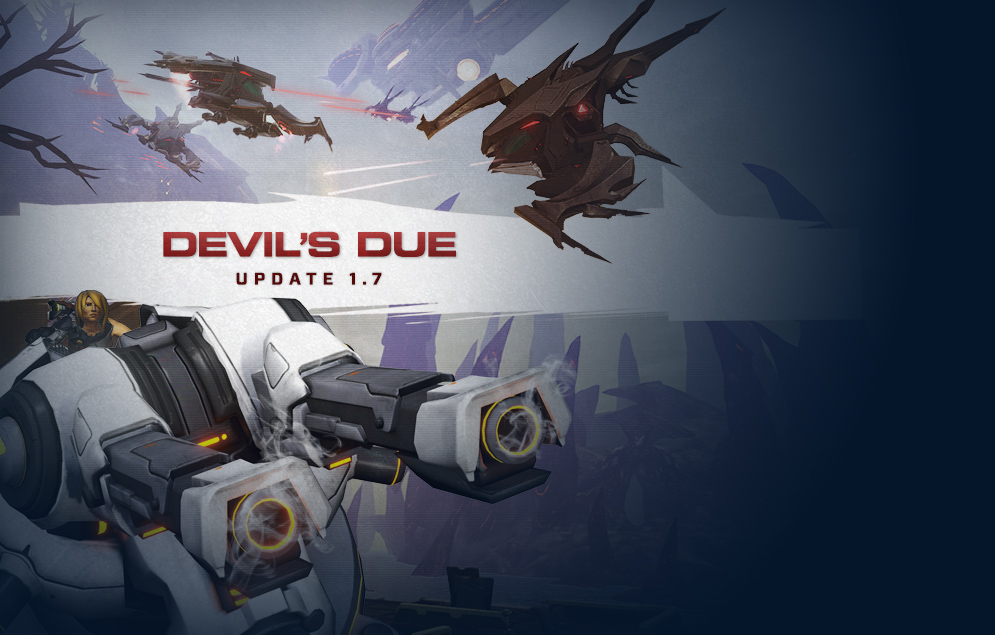
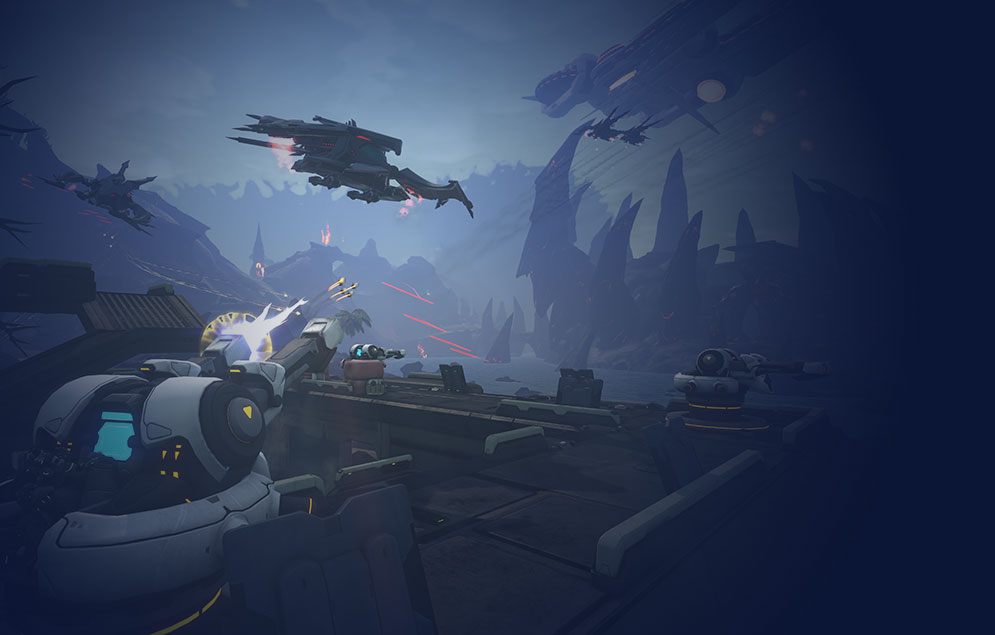
The notes for 1.7 "Devil's Due" went up on April 26, 2016. It raised the level cap to 45, rebuilt Devil's Tusk around a three-phase world event, added the Homecoming mission against the Razorwind leader Serkan, and brought back Baneclaw as a ten-player boss. That world event, the Devil's Tusk Evacuation, didn't work at launch, which left the new zone rather empty until Red 5 reset it on all shards about a week later, with limited success. On May 5, a follow-up patch, build 1962, fixed a handful of bugs from that update. Its last line reads:
- The PvP loadout button in the garage is no longer available as this feature is not yet implemented. Keple, May 5, 2016, in the last patch notes Firefall ever received
"Not yet implemented" turned out to mean "never". In May the logins failed several times, and in the middle of the month the servers moved back to the west coast, with a day and a half of downtime. At the end of May a post titled "Firefall and its Future" repeated the plan for the PS4 and added a mobile game, neither of which materialized. It was the last news post about the game for over a year.
June went by without a single developer post, the first time that had happened since the round-ups started in 2013. By the end of the month, players were telling each other to log in and take some screenshots to remember the game by. Around July 25, 2016 almost everyone who was left got let go, including FadedPez, who as community manager had been the face of the game for most of its life and had written a good part of the patch notes this page is based on. Neither Red 5 nor The9 ever announced it. Players learned about it from a tweet by Phobos, who had left in March.
Lights Out, and After
For fourteen months after the last patch, Firefall kept running, with nobody left to change it and soon nobody left to fix it either. In August 2016 an account named r5admin wrote on the forums, that some of Red 5's shares had been sold and that the IP would be pushed beyond the PC market. Around the same time the authenticator stopped working, which locked out new and returning players, support requests went unanswered and Red Beans bought in game didn't always arrive.
On August 30 the login servers and the forums went dark without a warning, and most players took it for the end. They came back, went down again on September 1 and on September 4, and in between Firefall was removed from the Steam store. After that the game settled into a state where the login mostly worked and instances, the market and the mail sometimes did. On October 17, 2016, after 190 issues, the Devtracker Weekly Round Up came to an end as well, because there was nothing left to round up.
People still logged in, played and took screenshots. On July 5, 2017, Red 5 announced that it would "suspend the Firefall efforts" on July 7, promised a mobile version that never came, and on July 7 the servers went offline.
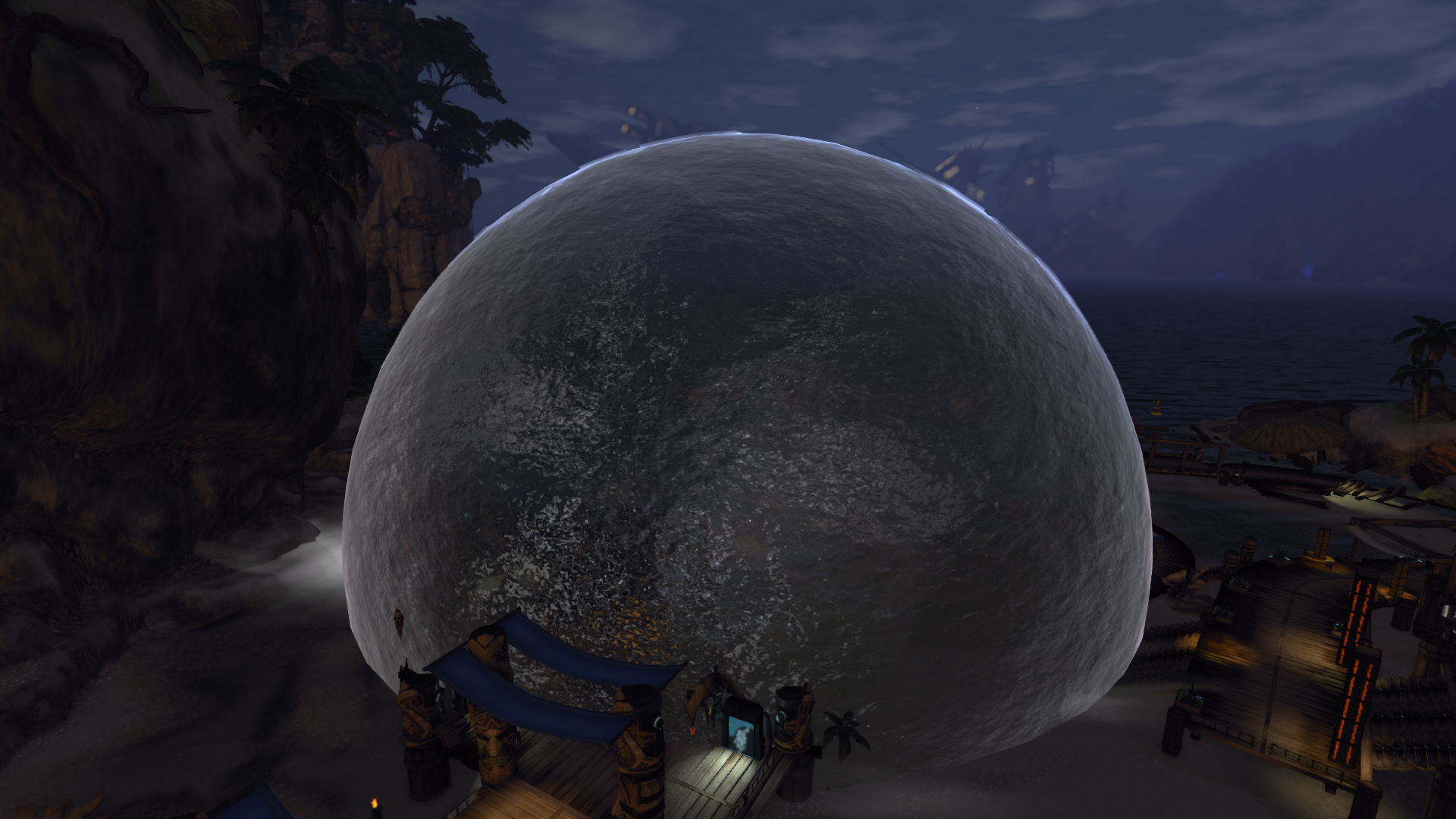
Mark Kern had already started crowdfunding Em-8ER in 2016, which he pitched as a spiritual successor. The game itself, however, lives on only where its players kept it. The Melding Wars has spent years reverse engineering the client and protocol, with the goal of running the original, unmodified game client against community servers. Build 1962, the last patch, is the version everything targets, since it's the client every remaining player has.
A lot of that work depends on what people kept. Installers, network captures, screenshots and notes collected over a decade, from my own time in the RAWR army, from the community team's archives, from people like Sleepwalker and Silv3rshadow who sent in their collections, now serve as evidence of how the game actually behaved.
Seen from here, Firefall's history is mostly a history of rebuilds. The 2010 reveal promised a Tribes-like shooter in an open world, the 2013 open beta was a crafting sandbox with a very particular economy, 1.0 became a fairly conventional leveling MMO, and by 2016 the game was built around instanced missions and a story. Each version had its fans and each rebuild lost some of them. Which of them was the "real" Firefall is a question every veteran answers differently.
If you'd rather see those rebuilds as data than as prose, the next section plots the builds and patch notes over time, and the timeline at the end puts all of the events above on one line.
Builds and Patch Notes
Every Firefall client carried a build number, and those numbers only ever went up. Plotted against time, they draw a fairly honest picture of how fast the game was moving: steep where Red 5 shipped a new build every few days, flat where nothing happened. You don't need to remember any of the numbers, except maybe the last one. Build 1962 is where the line ends, and it's the build The Melding Wars targets. Hover or tap a dot for details.
Firefall client builds over time
Live client, public test server and the Chinese client. Shaded bands mark the major versions.
Each build sits at the earliest date it's known to have been in use, taken from replays, installers and patcher packages, or from its patch notes where nothing else is left. Dashed segments span stretches without any known build. The one in 2012 covers the weekly closed beta patches, whose notes carry no build number, and the two months without a patch before 0.5.
Show as table
| Build | Line | In use from | Version |
|---|
The patch notes tell the same story from the other side. Here is every thread in the official Patch Notes forum, counted per month and split into regular patches and hotfixes. The busy stretches are the open beta and the months after launch, and the empty one in the middle of 2015 is the long quiet.
Patch Notes forum threads per month
111 threads, August 2012 to May 2016. Shaded bands mark the major versions.
Counted from the English Patch Notes forum. PTS notes and the German and French forums are not included.
Show as table
| Month | Patches | Hotfixes | Version |
|---|
The Timeline
Every event from the chapters above, plus the patches in between. Filter by kind, search for a name, and click an entry to open its details.
Red 5 Studios founded
The iPod recruiting campaign
Shanghai office closed
About 30 layoffs
The9 buys a majority stake
Press screenshots, watermarked 09.01.2010
Firefall revealed at PAX Prime
Playable at PAX East 2011
Arbitration against Webzen
Orson Scott Card to write the story
Closed beta begins
"The Server Apocalypse"
Webzen dispute settled
Red 5 Singapore founded
Beta runs 24/7
The oldest surviving patch notes
Weekly patches on the wiki
Licenses instead of ranks
Faster on foot
Weekly patches put on hold
The Firefall Mobile Gaming Unit
Beta servers offline
"Changed everything. Created fun."
Monetization begins
Founders Packs
The Founders patch
My screenshots start
Patch 0.6: new progression
Patch 0.7
Arsenal battleframe and VIP program
Open beta
Marketplace updates
Night of the Melding
First PTS patch notes draft
Mark Kern voted out as CEO
Patch 0.8: campaign and perks
Patch 0.9
Dawn of the Invasion
Doomsday event
1.0 early access
Firefall launches, also on Steam
Gamescom 2014
Update 1.1 "Elemental Destruction"
Update 1.2 "Together Toward Victory"
Update 1.3 "War in the Amazon"
PTS combat test
Razorwind preview
PTS: new starting experience
Bug-fix patch for 1.3
Chris Whiteside joins
US servers move to the west coast
PTS patch
Players start taking the client apart
PS4 version announced
Firefall in China
Night of the Melding 2015
The roadmap: "Journey 1"
PTS: first 1.6 build
About 40 layoffs
No Wintertide
PTS: combat iteration
Christmas payroll missed
Em-8ER
Mikachu and SkaDude leave
Update 1.6 "Razor's Edge"
The 1.6 migration drags on
Phobos leaves
Last 1.6 patch
Update 1.7 "Devil's Due" notes
"Firefall and its Future"
The last patch, build 1962
A month without a dev post
Development team let go
r5admin: shares sold
Unplanned outage
The last Devtracker Weekly Round Up
Shutdown announced
Servers shut down
Nothing matches. Try a different filter or search term.